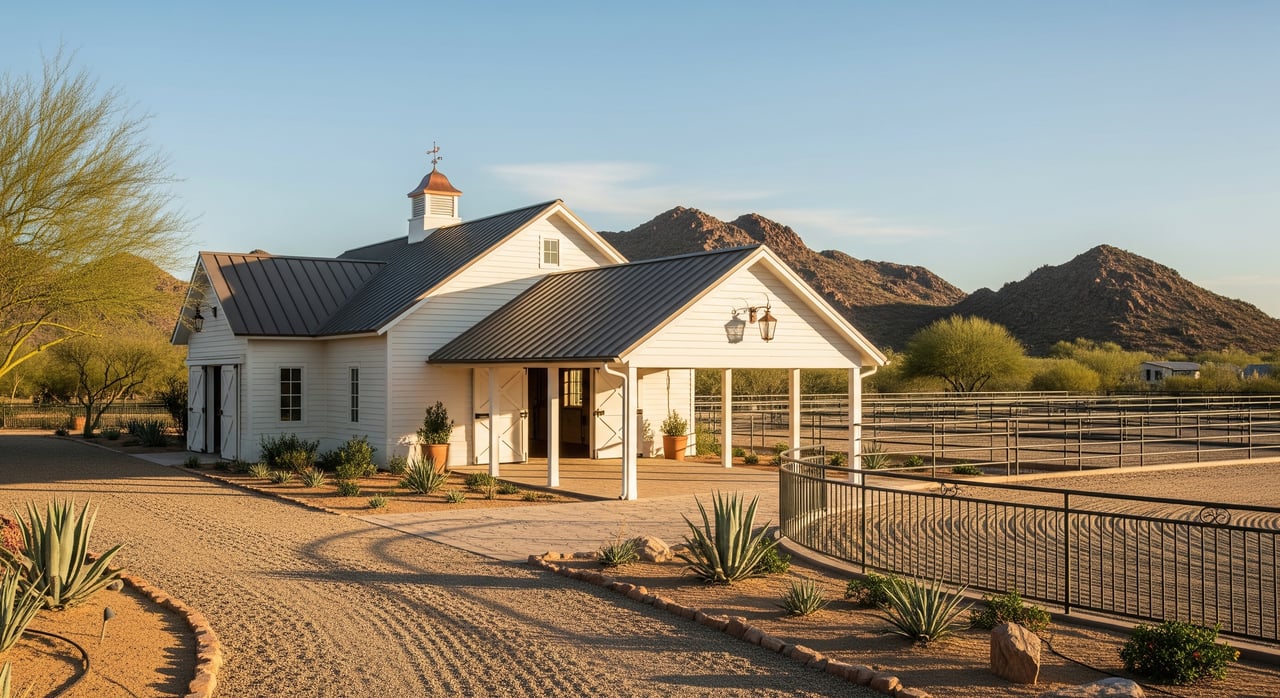
Imagine stepping outside at sunrise, hearing soft hoofbeats, and seeing the desert glow stretch across your arena. If you are drawn to space, privacy, and trail access, Cave Creek’s equestrian communities offer a distinct lifestyle with practical details you should understand before you buy. In this guide, you will learn where horse properties cluster, what features matter most, how they differ from standard subdivisions, and the key checks to make on wells, septic, permits, and access. Let’s dive in.
Where horse properties cluster
Cave Creek sits on the northern edge of the Phoenix metro in the Sonoran Desert. Equestrian homes tend to concentrate on the semi-rural fringes to the north, east, and west of town, as well as in nearby unincorporated Maricopa County. Many buyers look along the Cave Creek, Desert Foothills, and Carefree corridor for acreage with open views.
You will find a mix of rural parcels, ranchettes, and small-acreage subdivisions. Lot sizes often range from about 1 acre to 20 acres or more. Some properties sit within planned equestrian subdivisions, but many are individually improved parcels without large HOAs.
Proximity to public land and trailheads is a key draw. Areas with easier road access to regional parks and conservation land often see stronger demand from riders.
What an equestrian home includes
Equestrian properties are defined as much by their usable land as by their structures. The most important elements include:
- Lot size and topography. Hobby owners often start with 1 to 5 acres. Multi-horse setups commonly need 5 to 20 acres. In foothill areas, check how much level space is available for barns, arenas, and turnout.
- Barn and stable setups. Expect private barns with 2 to 6 stalls, a tack room, feed storage, and a wash rack. Larger hobby ranches may add covered paddocks, separate hay barns, and enclosed tack or office space.
- Arenas and turnout. Many properties have packed-dirt or sand arenas. Sizes vary by use, from simple turnout areas to discipline-specific arenas. Cross-fenced paddocks with run-in sheds are common for pasture rotation.
- Fencing. You will often see wood rail, vinyl rail, coated electric, or pipe rail for larger corrals. Wire mesh is used where foal safety is a priority. Gates should fit horse trailers and allow easy turning.
Access, roads, and utilities
Rural access and utilities are different from standard subdivisions. Plan for:
- Roads and driveways. Some neighborhoods have paved county roads, while others use unpaved access that can require seasonal grading. Long private drives and culverts may be your responsibility.
- Trailer access and parking. Check gate widths, turning radii, and parking pads for trucks and trailers.
- Water and septic. Many properties use private or shared wells, and rural lots often run on septic systems. Well permits, well capacity, and septic size and location affect where you can place barns and arenas.
- Power and backup. Power can require longer runs in rural areas. Propane, solar, and backup generators are sometimes used for pumps, lighting, and barn needs.
How these differ from subdivisions
Equestrian parcels live under different rules and expectations than higher-density neighborhoods.
- Zoning and use. Lower-density zoning or unincorporated county land may allow agricultural and animal uses that standard subdivisions do not. Some HOAs limit horses, while equestrian subdivisions may set specific rules for stall counts, arena placement, and setbacks.
- Lifestyle tradeoffs. You gain space and privacy, but you may be farther from services. Rural roads, animal activity, and arena maintenance can introduce dust and noise.
- Financing and resale. Lenders sometimes require different underwriting for properties with barns and arenas. These homes appeal deeply to equestrian buyers, which can narrow the general buyer pool but raise value for the right audience.
- Insurance and liability. Many owners carry farm or ranch endorsements or equine liability coverage. Arizona has laws related to agricultural liability and assumption of risk for equine activities, so review coverage with your insurer and attorney.
Trail access and local services
Cave Creek riders enjoy access to regional parks and public lands with multi-use trails and horse staging areas. Popular destinations include Cave Creek Regional Park, Spur Cross Ranch Conservation Area, nearby Tonto National Forest boundary trails, and dispersed BLM land. Always confirm current maps, seasonal rules, and trailer parking guidelines before you go.
You will also find a broad network of equine support in the greater Desert Foothills and Scottsdale area. Expect:
- Ambulatory equine veterinary care and access to larger equine hospitals in the metro.
- Farriers, trainers, and equine dentists who serve the Cave Creek and Carefree corridor.
- Local feed stores and tack shops, with larger suppliers in Phoenix.
- Boarding and arena rental options, helpful if you are transitioning into horse ownership or need temporary stabling.
Permits, wells, and septic basics
Plan ahead for permitting and utilities. The Town of Cave Creek and Maricopa County regulate building permits for barns, storage buildings, and arenas, including setbacks and septic separation. Unincorporated county parcels follow county rules, which may differ from town requirements.
Arizona’s Department of Water Resources oversees new well permitting and water rights. For existing wells, verify permits, production, and water quality records. Septic expansions or replacements typically require county review and can limit where you place outbuildings.
Some municipal codes and HOA covenants set limits on the number of large animals allowed. Always confirm local code and HOA CC&Rs before assuming your planned herd size will be permitted.
Heat, water, and wildfire prep
The Sonoran Desert climate shapes daily horse care and property planning. Hot summers call for shade structures, thoughtful turnout schedules, hydration and cooling systems, and ongoing fly control. Forage is limited, so most owners rely on purchased hay and dependable water supplies.
Many rural parcels lie in Wildland Urban Interface areas. Create defensible space, maintain clear trailer routes, and plan evacuation logistics for horses. Reliability matters, so consider backup power for pumps and barn lighting.
Buyer checklist before you offer
Use this quick checklist to streamline due diligence:
- Zoning and HOAs. Confirm horses are allowed and review any equestrian-specific covenants, stall limits, and arena setback rules.
- Easements and washes. Map any floodplain, wash, or conservation restrictions that affect arena placement or fencing.
- Wells and water. Verify well permits, recorded capacity, and water test results. Ask for documentation on water rights where applicable.
- Septic system. Confirm tank size, permit history, and recent inspection records. Make sure the system can handle your planned use.
- Barn and arena condition. Inspect roofing, framing, ventilation, stall dimensions, wash racks, electrical, and lighting. Check arena footing depth and drainage.
- Fencing and gates. Walk fence lines, inspect posts and hardware, and test gate widths for trailer access.
- Operations plan. Match paddock count and turnout space with the number of horses you intend to keep. Review manure management and past neighbor concerns.
- Storage and pests. Evaluate hay storage for moisture and rodent control. Review fly and pest management strategies.
- Power and backup. Confirm capacity for pumps and ventilation. Note any solar or generator systems.
- Emergency access. Practice trailer turnarounds and map evacuation routes. Identify nearest equine vet and typical response times.
- Insurance. Ask your insurer about farm or ranch endorsements and any exclusions related to boarding or instruction.
What drives value here
Three factors tend to shape value in Cave Creek’s equestrian market:
- Usable flat acreage. Level ground for arenas and turnout is often the top driver.
- Quality of improvements. Barn design, stall count, arena footing and drainage, fencing, and documented well and septic systems make a meaningful difference.
- Trail and services access. Close proximity to trailheads, farriers, vets, and feed suppliers boosts day-to-day convenience and appeal.
Who this lifestyle fits
Different buyer profiles gravitate to different setups:
- Hobbyist owner. Often seeks 1 to 5 acres with a small barn and basic arena or access to nearby boarding.
- Multi-horse enthusiast. Looks for 5 to 20 acres or more, multiple paddocks, larger hay storage, and strong well capacity.
- Prospective boarder or operator. Evaluates zoning for commercial boarding, trailer parking logistics, manure handling, and specialized insurance.
Costs you should plan for
Owning a horse property involves recurring and capital costs beyond a typical home. Budget for feed and hay, farrier services, routine veterinary care, fly control, pasture and arena maintenance, and well and pump servicing. Over time, expect capital items such as fence replacement, barn roof work, arena resurfacing, septic maintenance or repair, and driveway grading. Insurance may require special endorsements, especially if any instruction or boarding is involved.
Ready to explore properties?
If Cave Creek’s equestrian lifestyle speaks to you, partner with a senior-led, locally rooted team that understands acreage, barns, trail access, and the finer points of rural due diligence. We will help you match your riding goals with the right lot size, improvements, and location, then guide you through permits, wells, septic, and insurance so you can buy with confidence.
Request a private consultation with the experienced team at Desert Living AZ.
FAQs
Where to find horse properties in Cave Creek
- Semi-rural edges to the north, east, and west of town, including nearby unincorporated Maricopa County in the Desert Foothills and Carefree corridor.
Typical lot size for two horses in Cave Creek
- Many hobby owners consider 1 to 5 acres, but your needs depend on arena size, turnout goals, and local rules or HOA limits.
What permits apply to barns and arenas
- The Town of Cave Creek and Maricopa County regulate building permits, setbacks, and septic separation, so confirm requirements before building or expanding.
How wells and septic affect property plans
- Well permits, capacity, and water quality plus septic size and location can determine where you place barns, arenas, and wash racks.
Do I need special insurance for a horse property
- Many owners add farm or ranch endorsements or equine liability coverage and review exclusions with an insurer familiar with equine activities.
Are horses allowed in every subdivision
- No, some HOAs prohibit or restrict large animals, while equestrian subdivisions may allow horses with specific rules on stall counts and arena placement.